28 Jun 2026
Event Multipliers and Credit Alignments: How Platforms Build Retention Through Layered Incentives
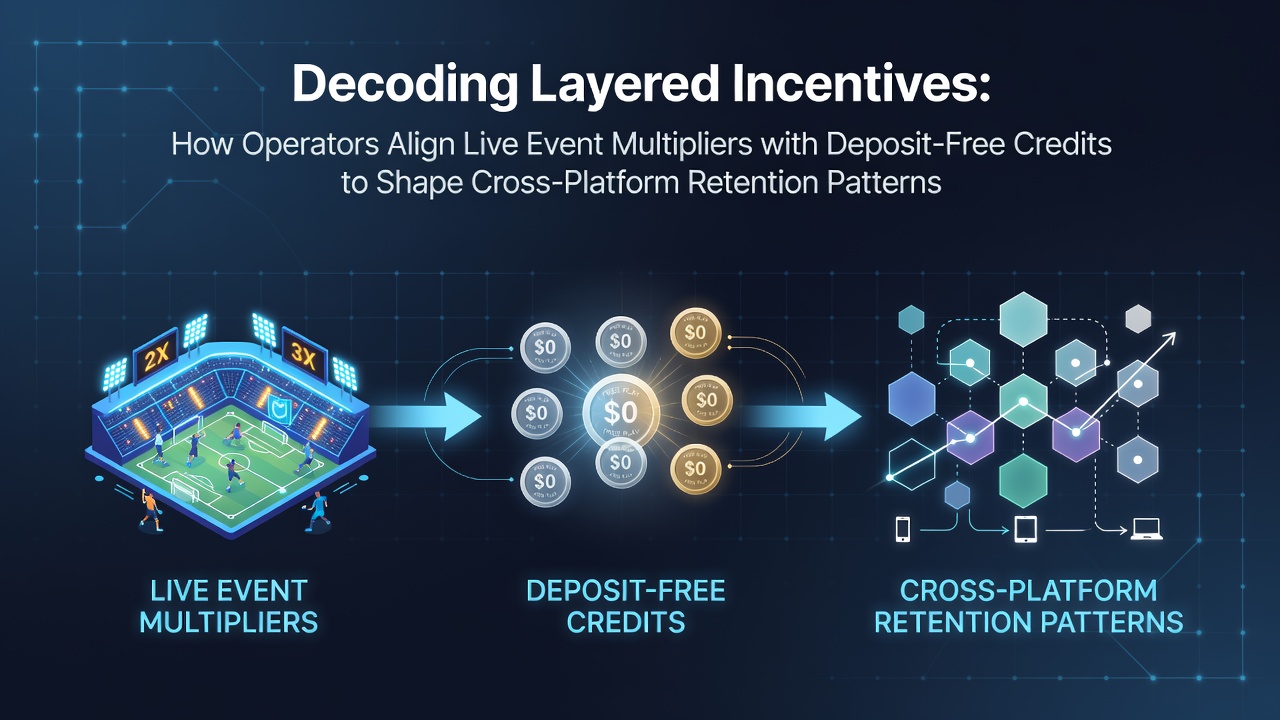 Operators coordinate live event multipliers with deposit-free credits to influence how users move between sports betting interfaces and casino environments. This coordination creates sequences where a multiplier applied during an ongoing match pairs with a credit that activates on a separate vertical without requiring an initial deposit. Data from industry tracking shows these sequences increase session frequency across platforms when the timing of the multiplier aligns with the availability window of the credit.
Mechanics of Live Event Multipliers
Live event multipliers adjust odds or returns on in-play markets such as next-goal timings or point spreads while a contest unfolds. Operators activate these adjustments through backend systems that respond to real-time score changes or betting volume spikes. When a multiplier reaches a designated threshold, it often triggers a notification that routes the user toward an associated credit usable in a casino lobby or slot section. Reports from the American Gaming Association indicate that platforms deploying synchronized multipliers recorded higher cross-product navigation rates during peak evening hours in early 2026.
Deposit-free credits function as fixed-value tokens awarded upon registration or after completing a verification step. These credits carry wagering requirements that differ from standard deposit bonuses, typically featuring shorter expiry periods. When an operator links a multiplier to a credit, the system calculates the combined expected value so that completion of the multiplier segment feeds directly into the credit's activation criteria. This linkage reduces friction between product types and maintains user presence on the operator's ecosystem rather than prompting migration to competitors.
Cross-Platform Retention Patterns
Retention metrics reveal that users exposed to paired incentives exhibit extended platform dwell times compared with single-product campaigns. A pattern emerges where a live football match multiplier prompts an immediate switch to a casino table game powered by the credit, after which the user returns to sports markets for subsequent events. Figures from the Australian Gambling Research Centre show that operators employing these paired structures maintained monthly active user counts with lower month-to-month variance during the first half of 2026.
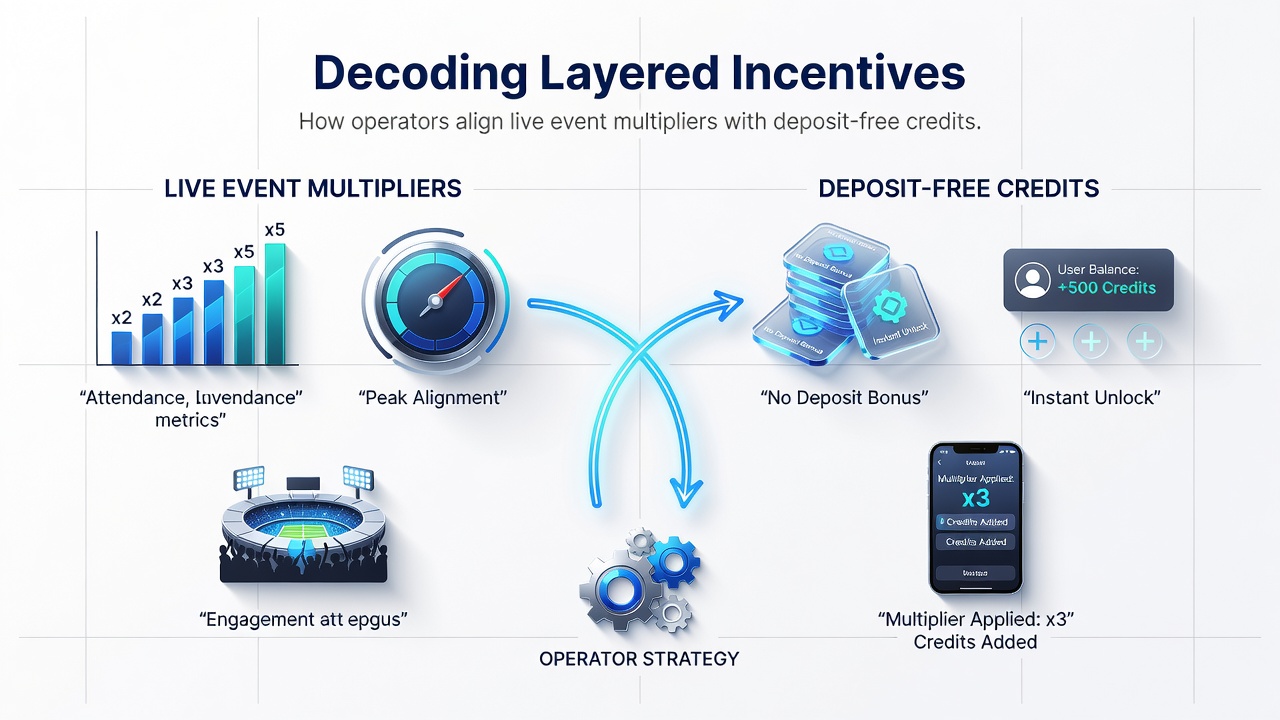
Platforms segment user cohorts based on historical product preference before assigning multiplier-credit combinations. High-frequency sports users receive multipliers tied to credits with casino-friendly wagering terms, whereas casino-primary users encounter multipliers on niche live markets paired with sports-oriented credits. This segmentation draws from behavioral datasets that track navigation paths, deposit intervals, and bonus redemption sequences. As June 2026 approaches, several operators have begun testing adaptive algorithms that refine these assignments using prior-week engagement scores.
Operational Alignment Strategies
Backend teams integrate multiplier engines with credit ledgers through shared APIs that enforce eligibility rules in real time. When a live event multiplier activates, the API checks whether the user holds an unexpired deposit-free credit and adjusts display priority accordingly. This technical alignment prevents overlap where both incentives compete for attention within the same session. Industry observers note that operators who maintain synchronized clocks between multiplier windows and credit expiry dates achieve more consistent redemption volumes across geographic markets.
Compliance departments review these alignments against regional advertising standards to ensure that communications about multipliers and credits remain distinct yet sequential. Documentation from the European Gaming and Betting Association outlines recommended disclosure formats that present multiplier terms first, followed by credit conditions, without combining the two into a single headline claim. Operators apply these formats when notifying users via push messages or in-app banners during live events.
Measurement and Adjustment Cycles
Analytics platforms record entry points, sequence completion rates, and subsequent deposit behavior after each paired campaign. Teams compare these figures against control groups that receive either the multiplier or the credit in isolation. Adjustments occur weekly, with changes to multiplier thresholds or credit values calibrated to maintain target retention curves. Data sets collected through mid-2026 demonstrate that iterative refinement of alignment parameters correlates with steadier week-over-week user return rates.
Conclusion
Layered incentive structures continue to evolve as operators refine the technical and regulatory parameters that connect live event multipliers with deposit-free credits. The resulting patterns influence how users distribute activity across sports and casino products while supporting measurable retention outcomes. Continued monitoring of these alignments provides operators with data points for calibrating future campaigns ahead of market shifts projected for later in 2026.